
Salary Slip Explained in India – Full Breakdown of Basic, HRA, PF & Deductions 📄💰
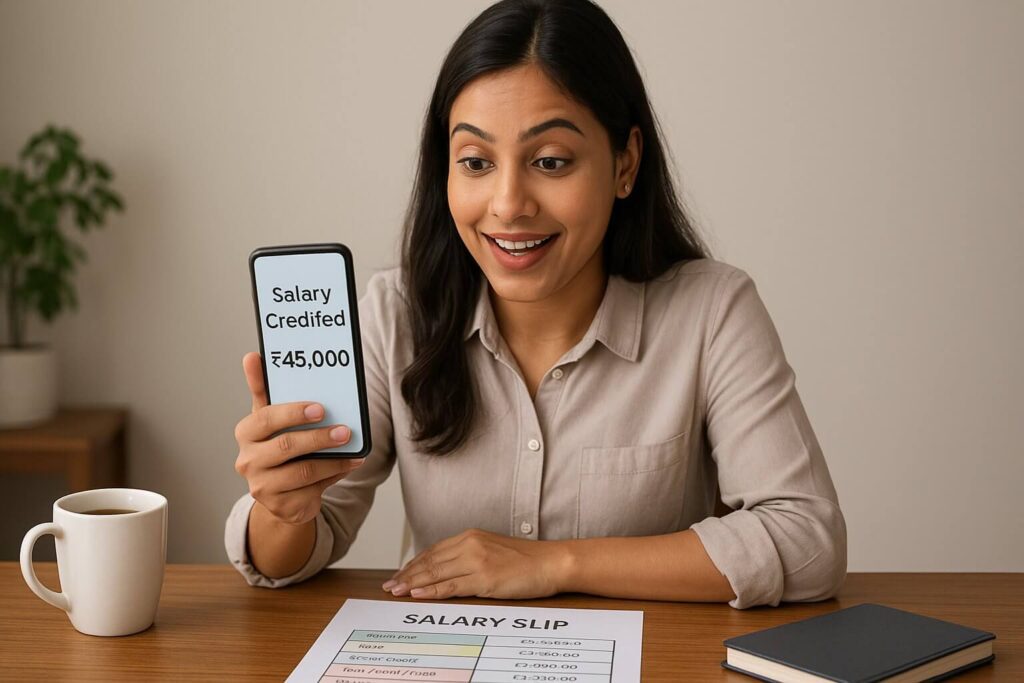
Soch ke dekho doston – tumhe ek din woh SMS aata hai: “Salary credited ₹45,000”. Dil ekdum khush! 🎉 Lekin jaise hi tum salary slip (payslip) kholte ho, confusion shuru:
“Arre yeh Basic Salary kya hota hai? HRA kaise calculate hota hai? PF kyu cut gaya? TDS kyu itna zyada hai? Aur bank account me itna kam paisa kyu aaya?”
Agar tum bhi har mahine yehi soch ke pareshaan hote ho, toh chill karo. Is blog me main tumhe pura Salary Slip Explained in India breakdown dunga – ekdum simple Hinglish me. Basic, HRA, PF, Allowances aur Deductions sab samjh aayega, with real-life examples.
Salary Slip Kya Hota Hai?
Salary slip ek monthly report card hota hai tumhari income ka. Yeh HR ya employer tumhe bhejte hain jab salary account me credit hoti hai. Isme likha hota hai:
- Earnings → Basic Salary, HRA, Allowances, Bonus
- Deductions → PF, Professional Tax, Income Tax, Loan EMI etc.
- Net Take-Home Salary → Jo actually tumhare bank me aata hai
Simple words me – Salary Slip batata hai kitna paisa tum earn karte ho aur kitna cut ke ghar le jaate ho.
👉 Payslip info (Wikipedia):
https://en.wikipedia.org/wiki/Payslip
Salary Slip Itna Important Kyu Hai?
Log sochte hain ki salary slip toh “just another HR email” hai. Lekin asli me iska importance kaafi zyada hai:
- 📝 Income Tax Filing – ITR bharte time mandatory hai.
- 🏦 Loans & Credit Card – Bank ko proof of income chahiye hota hai.
- 📑 Visa / Flat Rent – Salary slip credibility dikhata hai.
- 💡 Budgeting & Investments – Tumhe samajh aata hai ki savings aur deductions kitne ho rahe hain.
👉 Example: Tumne ek credit card apply kiya with ₹1,00,000 limit. Bank tumhari salary slip dekhega, tab decide karega ki tum eligible ho ya nahi. Matlab chhoti si PDF, par life me kaafi badi value rakhti hai.
Salary Slip Structure in India
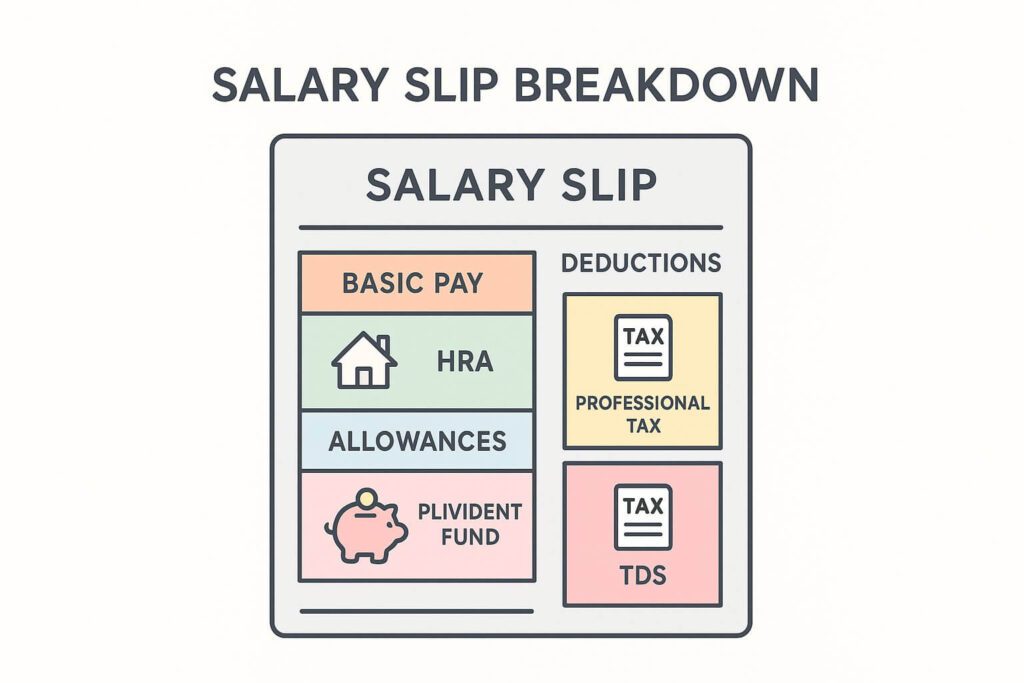
Indian salary slip do main parts me hota hai:
1. Earnings (Jo mil raha hai)
- Basic Salary
- HRA (House Rent Allowance)
- Dearness Allowance (DA)
- Special Allowance
- Travel / Conveyance Allowance
- Medical Allowance / Reimbursements
- Performance Bonus
2. Deductions (Jo cut raha hai)
- Provident Fund (PF)
- Professional Tax (PT)
- TDS (Tax Deducted at Source)
- Other deductions (Insurance, Loan EMI etc.)
Aur end me tumhe milte hain 2 main numbers:
- Gross Salary = Total earnings before deductions
- Net Salary (Take-Home) = Gross – Deductions
1. Basic Salary – Core of Your Payslip
Basic Salary ek fixed component hota hai jo usually 35–50% CTC hota hai.
👉 Example: Agar tumhara CTC ₹6,00,000 hai, toh basic salary ho sakti hai ₹20,000/month.
- Ye fully taxable hai.
- PF aur HRA isi base par calculate hote hain.
- Zyada basic salary = zyada deductions (PF, Tax) but better long-term benefits (pension, gratuity).
💡 Pro tip: Balanced structure best hai – na bohot high, na bohot low.
2. HRA (House Rent Allowance) – Tax Saving Hero
HRA tumhe rent ke liye diya jata hai.
👉 Example: Agar tumhara gross salary ₹40,000 hai, HRA ho sakta hai ₹12,000.
Tax exemption formula:
- Actual HRA received
- 40% (non-metro) ya 50% (metro cities) of Basic
- Rent paid – 10% of Basic
👉 Lowest value = Tax free
Relatable scene:
Ravi ka salary ₹50,000 hai (Basic ₹20k, HRA ₹10k). Wo Bangalore me rent deta hai ₹12k. Formula lagake usne almost ₹8k annual tax bachaya.
3. Provident Fund (PF) – Compulsory Savings
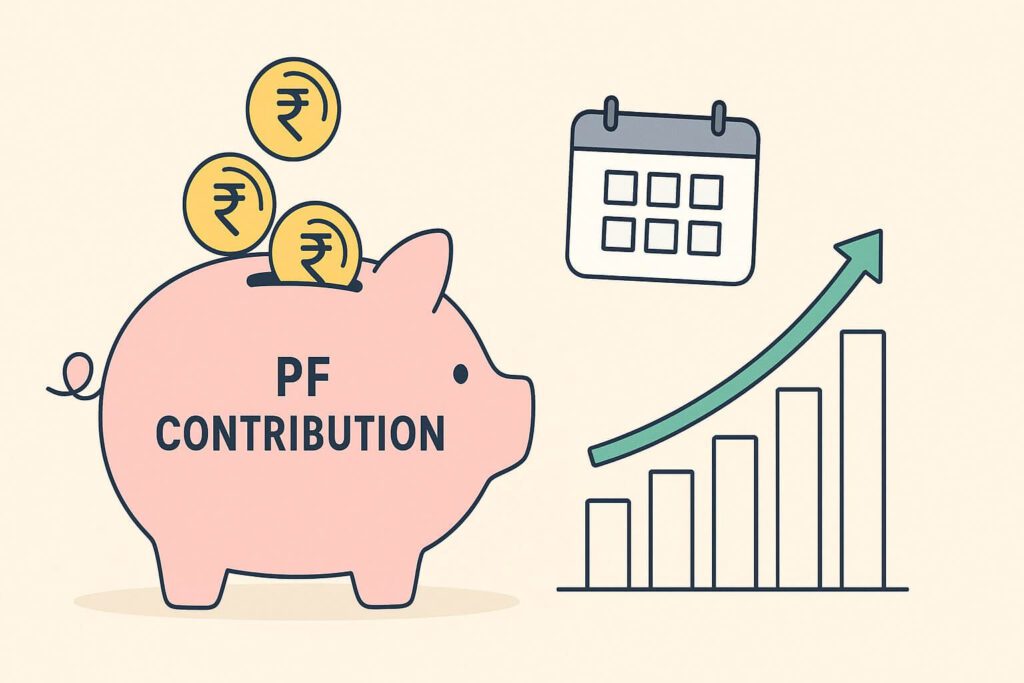
PF matlab forced savings. Employer aur employee dono contribute karte hain 12% of Basic Salary.
👉 Example: Agar basic ₹20,000 hai → PF contribution ₹2,400 by employee + ₹2,400 by employer = ₹4,800/month.
- Interest ~8% lagta hai (kaafi acha compared to FD).
- Retirement ke liye ekdum mast corpus banta hai.
- 80C ke under tax deduction bhi milta hai (₹1.5 lakh tak).
💡 Ha, abhi lagta hai ki take-home kam ho gaya, par socho – yeh paisa future me ekdum kaam aayega.
4. Allowances – Extra Perks
Apart from Basic & HRA, companies dete hain different allowances:
- Special Allowance → Mostly taxable, filler component.
- Travel / Conveyance Allowance → Office commute ke liye.
- Medical Allowance → Agar bills submit karo toh tax free.
- Performance Bonus → Based on targets, kabhi annual bhi milta hai.
👉 Example Salary Slip:
- Special Allowance – ₹8,000
- Travel Allowance – ₹1,600
- Medical – ₹1,250
Kuch allowances taxable hote hain, kuch partial relief dete hain.
5. Deductions – “Mera Paisa Kahan Gaya?” Section
Yeh woh jagah hai jo har employee ka dard hai 😅.
(a) PF
Already covered – 12% basic salary.
(b) Professional Tax (PT)
State govt. ka tax. Max ₹200/month (sab states me nahi hota).
(c) TDS
Employer tumhara annual tax estimate karke har month deduct karta hai.
(d) Other deductions
- Loan EMI (company se advance liya ho toh)
- Insurance premium
- Canteen charges, etc.
👉 Relatable line: “Package 6 LPA bola tha, par bank account me sirf ₹38k hi kyun aaya?” Answer = yeh deductions.
“Aapko yeh concept pasand aa raha hai toh aapko yeh wala blog bhi kaafi useful lagega  [Tax Benefits for Salaried Employees in India – Complete Guide
 ]”
]”
CTC vs Gross vs Net Salary – The Real Confusion
- CTC (Cost to Company): Poora package (basic + allowance + PF + insurance etc.)
- Gross Salary: CTC minus non-cash benefits
- Net Salary: Jo actually bank account me aata hai
👉 Example:
- CTC = ₹6,00,000
- Gross = ₹5,40,000
- Net = ~₹4,50,000
Isi liye HR ke “6 LPA” ka matlab hamesha ₹50k/month nahi hota 😅.
Salary Slip Example
Earnings:
- Basic – ₹20,000
- HRA – ₹10,000
- Special Allowance – ₹8,000
- Conveyance – ₹1,600
- Medical – ₹1,250
Total = ₹40,850
Deductions:
- PF – ₹2,400
- PT – ₹200
- TDS – ₹1,500
Total = ₹4,100
👉 Net Salary = ₹36,750
Salary Slip Explained in India – Common Myths
- “High CTC = High Take-home” → False. Structure matters.
- “PF is loss” → Wrong. It’s future savings.
- “HRA hamesha tax-free hai” → Sirf rented house me hi.
- “All allowances tax-free hote hain” → Nope. Most taxable.
Smart Salary Slip Reading Hacks
- Basic salary ideally 40–50% of CTC hona chahiye.
- Agar rent dete ho toh HRA claim karo.
- PF se opt-out mat karo (especially early career me).
- TDS track karo, taaki last me zyada tax na dena pade.
- Har salary slip safe rakhna – job change aur loan me kaam aati hai.
Real-Life Example
Rohit, ek 25-year-old software engineer Bangalore me ₹7 LPA package pe tha. Usko laga ₹58k/month milega, par pehli salary slip me sirf ₹46,500 credit hua.
Breakdown check kiya toh:
- PF = ₹3,600
- PT = ₹200
- TDS = ₹6,000
- Other = ₹1,700
Baad me usne HRA exemption aur 80C investments claim kiye, aur uska take-home ₹3k/month badh gaya.
Tips to Increase Take-Home Salary
- Rent dete ho toh HRA exemption ka full benefit lo.
- 80C investments use karo (PF, PPF, ELSS, LIC etc.).
- Food coupons / company benefits claim karo.
- Annual tax planning pehle se start karo.
Conclusion – Salary Slip Explained in India
Ab tumhe clear ho gaya hoga ki salary slip koi boring HR document nahi hai, balki tumhari financial blueprint hai.
Hamne dekha:
- Salary slip ka breakdown (Basic, HRA, PF, Allowances, Deductions)
- CTC vs Gross vs Net salary difference
- Common myths aur smart hacks
👉 Next time jab HR ka “Salary Slip PDF” aayega, tum confused nahi hoge. Tumhe pata hoga har rupee kahan ja raha hai – aur kaise tum tax save kar sakte ho.
📢 Iss blog ko apne doston ke saath share karo .
Together grow karte hain! 💪
Psychology of Money in India – How Mindset Shapes Your Financial Success 🧠💰

India mein paisa numbers se zyada mindset ka khel hai. Aur jis din tumhara money mindset shift ho gaya, us din financial freedom door nahi rahegi.